
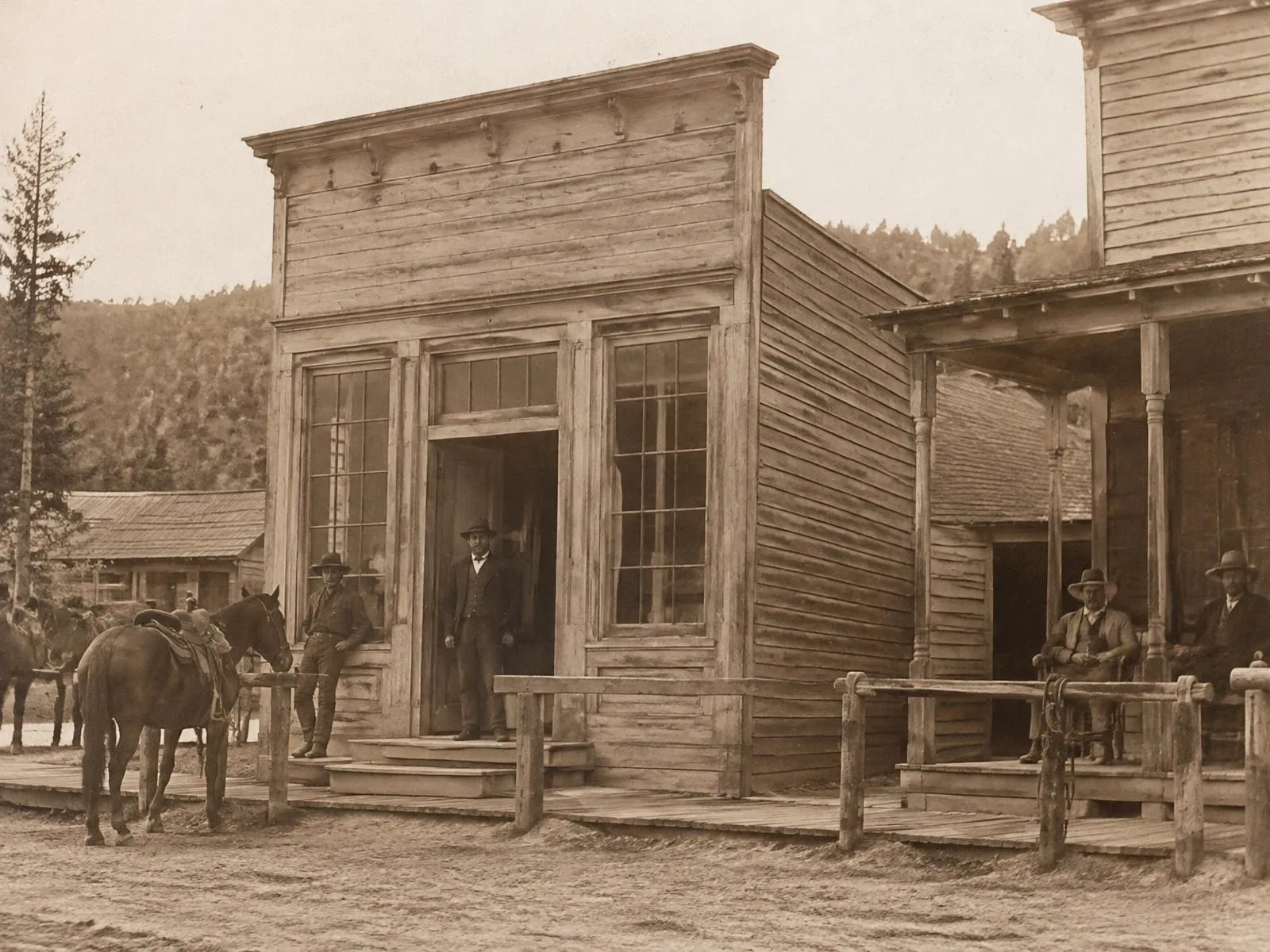
The bank on main street
Hemoglobin Hills was a mining town before it was anything else. It had a general store, a livery, a church that met on alternate Sundays, and the Saloon, which was older than all of them and belonged to the town in a way no business since ever has. The Saloon was where deals were made and gold was counted. It was never ours.
Next door, a small bank opened in 1871. It offered something the town lacked: a locked room, a ledger and a receipt. Miners deposited their earnings and received a slip stamped with the same three words. The bank charged a fee for the service and, over time, for several related services.
When the company incorporated decades later, it took the town's name. The town, by then, was not using it as much.
Transport and records
Custody naturally led to movement. By the turn of the century, Hemoglobin wagons carried payroll across three territories, and the company's records office maintained deeds, wills and mining claims for clients who preferred not to keep them at home. Records continuity remains one of our most requested services.
Government contracts and research
In the twentieth century, public agencies began to ask us for the same reliability. We built secure facilities, operated a correctional contract on a closed island site, and established a research office to study environments that others had not documented. In the last two decades we have brought that operational experience to municipal water systems.
Our business has grown. Our first principle has not changed. Every deposit, every record and every program in our care is handled the way the first one was.
“Received for safekeeping.”
As stamped on the bank's original deposit receipts.